 English


Veterinary Orthopedic Bone Holding Forceps: Kern vs Verbrugge vs Lowman Clamps
Fracture reduction mechanics, serrated clamping jaws, and speed-lock mechanisms for canine and feline bone repair.
Reviewed for canine TPLO biomechanical fixation, atraumatic feline dental luxation, small animal spay/neuter pack ergonomics, and veterinary autoclave protocols.
Maintaining Rigid Anatomic Reduction During Plate Application
In small animal fracture repair, achieving rigid anatomic alignment without stripping periosteal blood supply is paramount. Holding slippery bone fragments steady while drilling screw pilot holes requires specialized bone-holding forceps.
Kern and Self-Centering Bone Forceps
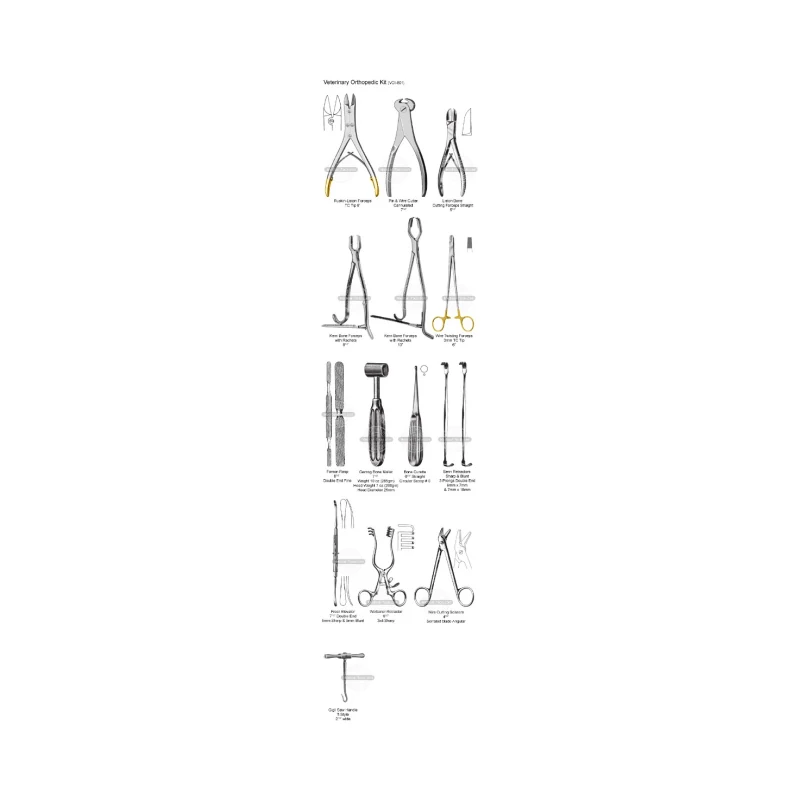
Kern bone forceps feature two heavy jaws lined with interlocking multi-toothed serrations and a ratchet locking bar. They provide massive clamping pressure across diaphyseal femur and tibia fractures, ensuring zero fragment migration during reaming.
Verbrugge Clamps with Speed-Lock Nuts
For holding orthopedic plates securely against bone during screw insertion, Verbrugge forceps utilize curved jaws and an ergonomic speed-lock threaded wheel. Surgeons can smoothly increase or decrease clamping torque with one finger, preventing bone crush injuries in pediatric or osteopenic patients.
Related Categories & Sourcing Hubs
Dr. Amna Tariq
Small Animal Spay/Neuter Pack Specialist
Reviewed for canine TPLO biomechanical fixation, atraumatic feline dental luxation, small animal spay/neuter pack ergonomics, and veterinary autoclave protocols.